New EU Guidelines For AI Labelling
There’s been a lot of confusion and panic this week about “huge fines”, “drastic measures” and “sweeping new AI rules” in the EU. In reality, it’s a lot more narrow — and a lot more sensible. And mostly it’s about making AI more obvious when it actually needs to be obvious — especially for AI-generated content.
Starting from Aug 2, 2026, AI labelling is a legal requirement for any company that serves EU citizens. And similar to European Accessibility Act, it’s not limited to EU companies. It affects any company worldwide with EU operations as long as their AI output is used by people in the EU. Let’s see what exactly it means for us.
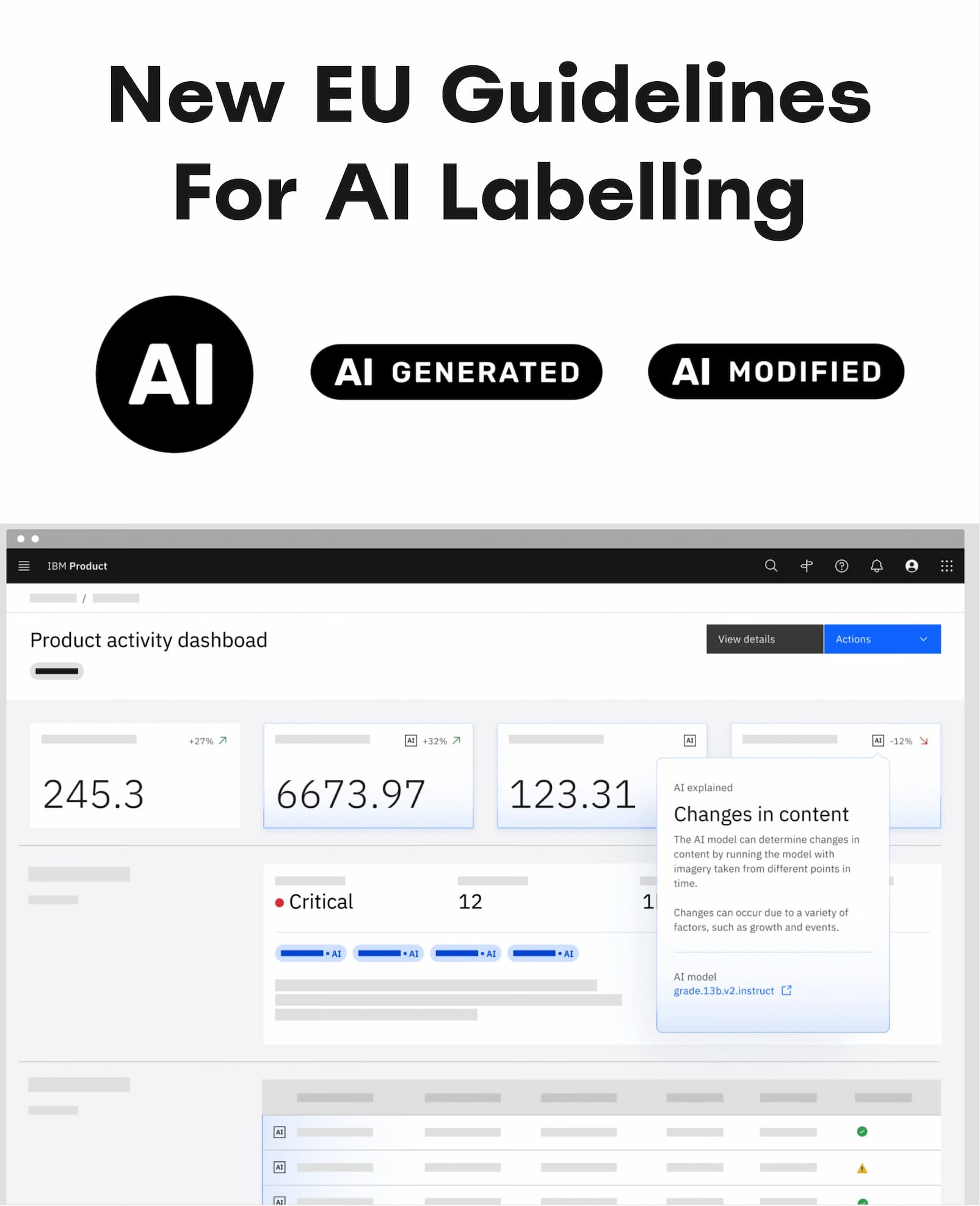
The goal of AI labelling is to help everyone exposed to AI content to recognize, in a clear and distinguishable way, that the content has been artificially generated or manipulated.
According to Article 50(4) of the AI Act, AI labelling applies to:
- Deepfakes. Any image, audio, or video that resembles a real person, object, place, or event and would falsely appear authentic or truthful. Content that is not deceptively realistic generally doesn’t apply.
- Chatbots and AI agents. Users must be informed if they’re not talking to a human.
- Fully AI-written text. Specifically on matters of public interest, where there has been no human review or editorial work.
- Emotion recognition and biometric categorization tools.
Both providers (who build or supply the AI system) and deployers (who use it) carry legal obligations. Similar to GDPR and EAA, a company doesn’t escape Article 50 just because it licensed an external AI tool from a third party.
However, it doesn’t mean that all AI-generated content must be explicitly labelled.
Beyond the use cases above, pretty much everything else — the vast majority of AI-assisted work — simply isn’t covered by new transparency rules. Most notably, the disclosure obligation does not apply where the AI-generated text has been reviewed and edited by a human, with a named person or entity taking editorial responsibility for it.
Some confusion circles around what exactly “public interest” means, where it starts and where it ends. On its own, it refers to health, safety, environment, economy, finances, politics, science, or culture. If AI-generated product claims touch upon them, the disclosure rule applies.
Some law firms recommend labelling realistic AI-generated illustrations or photos as a precaution for advertising, marketing and other commercial content. AI-generated product illustrations, photos, or posters do need a disclosure, as long as they resemble a real person, place, object, or event.
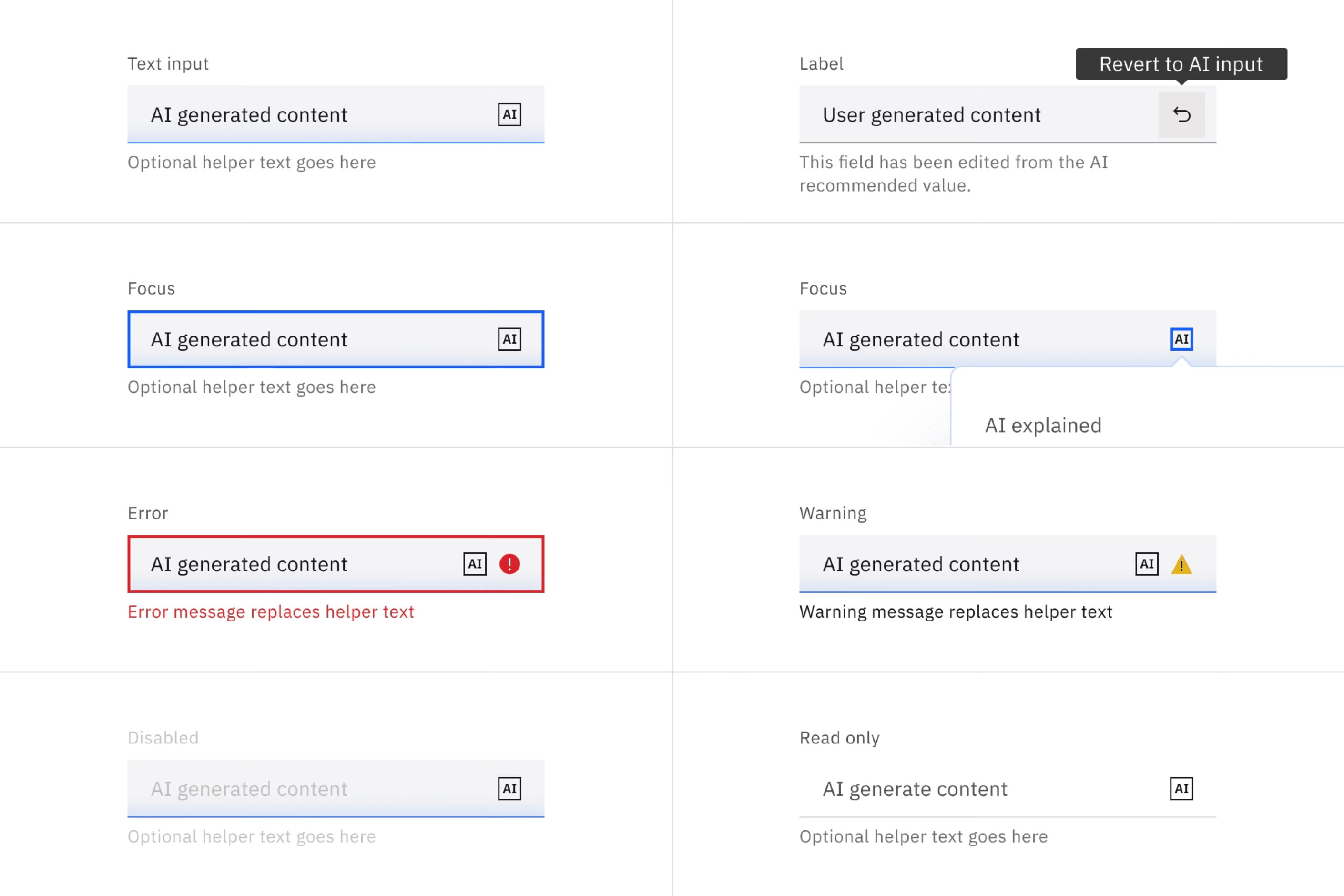
But at which point does edited AI content stop being AI content? When a form is pre-filled with AI, but then a user edits it, is it still AI? EU Commission’s guidance is a little fuzzy. Small assistive edits — spellcheck, grammar, formatting, cropping, colour correction, and AI-generated translation — don’t count as AI generation.
AI-generated summaries, composite imagery, substantive rewrites, or adding and removing elements from a photo are considered AI generation. In practice, fine-tuning a sentence a person wrote is fine, but generating the sentence on its own requires a disclosure.
“A human skimmed it before publishing” doesn’t qualify as editorial review. The Commission is explicit that it needs to be substantive, with a named person responsible for the editorial control.
In other words, the fine line lies between intentional manual intervention and automated generation. The latter always has to be disclosed (exception: closed B2B environments).
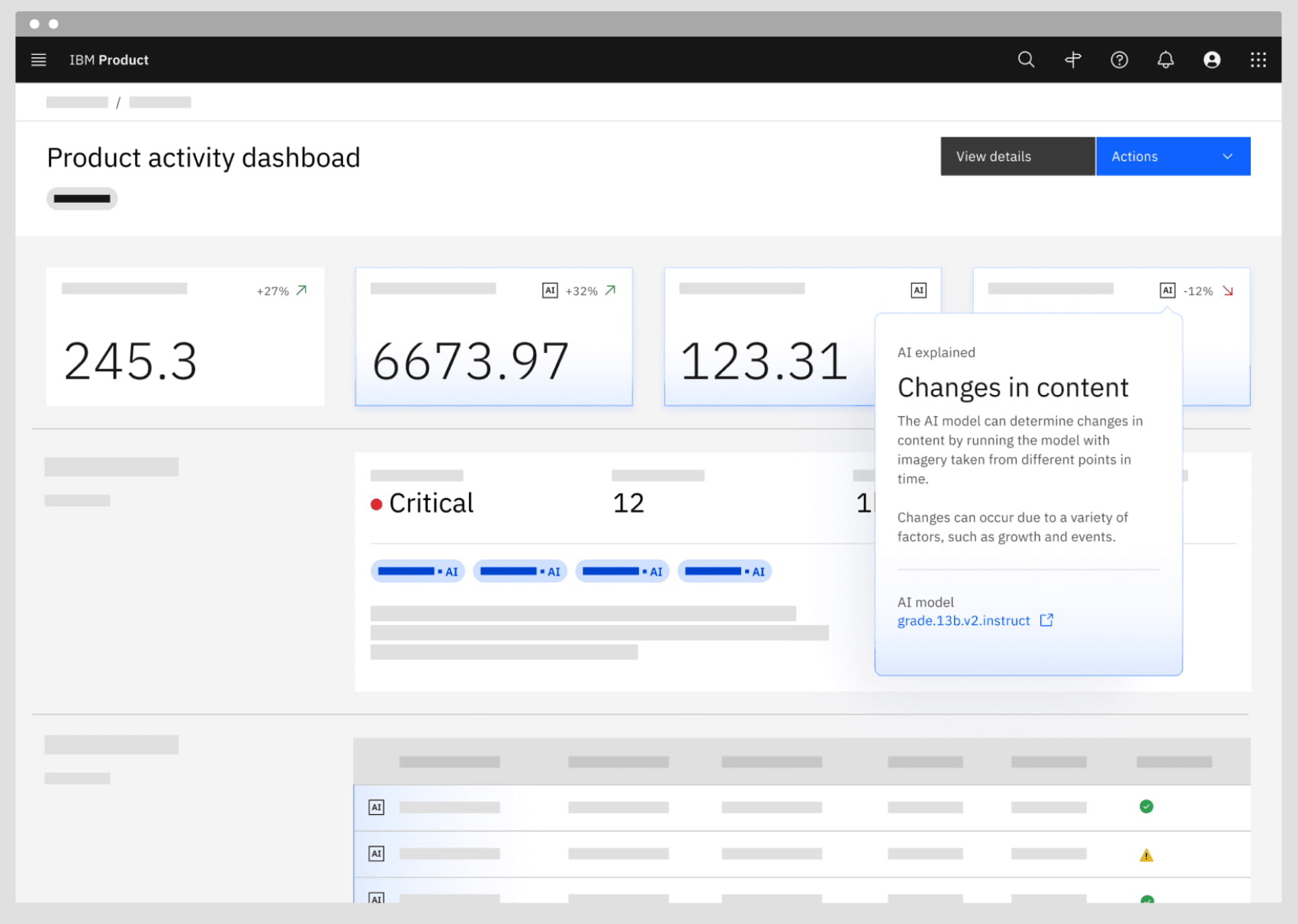
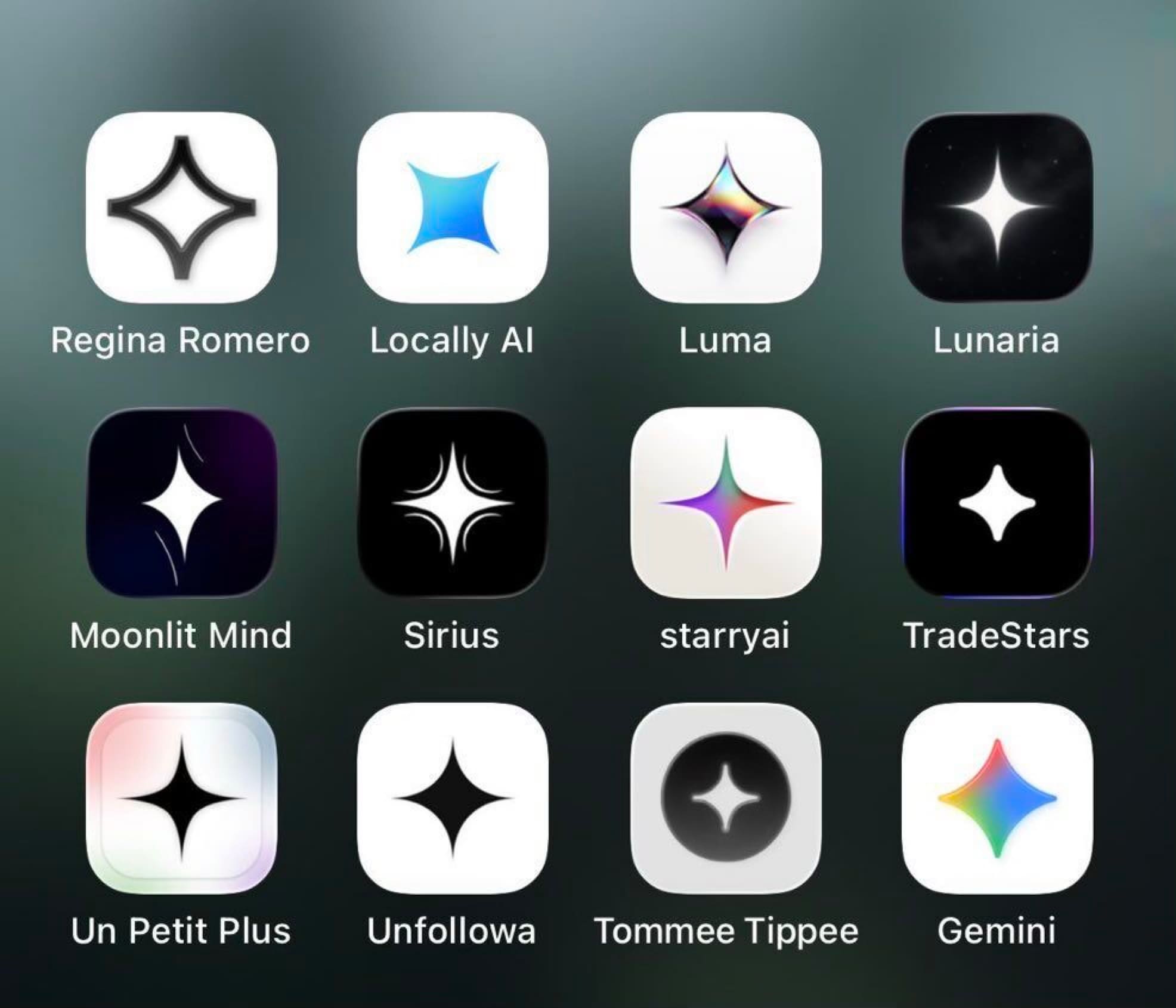
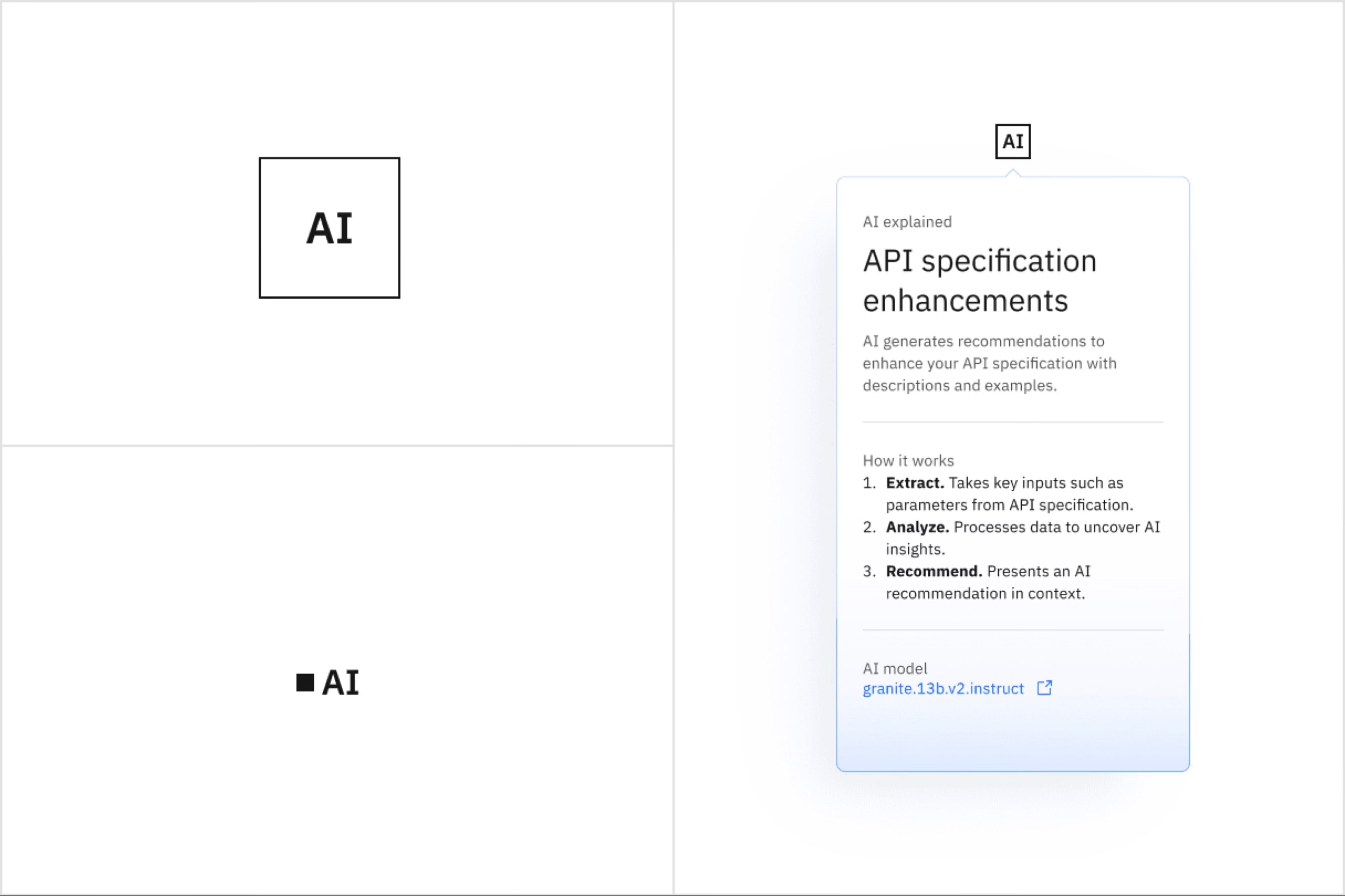
As part of the Code of Practice, the European Commission has published an EU AI icon set. It’s a specific “AI” mark (similar to the AI label in Carbon Design System) — not the generic ✨ sparkle that many products use to signal AI. The signal must be “clear and distinguishable”.
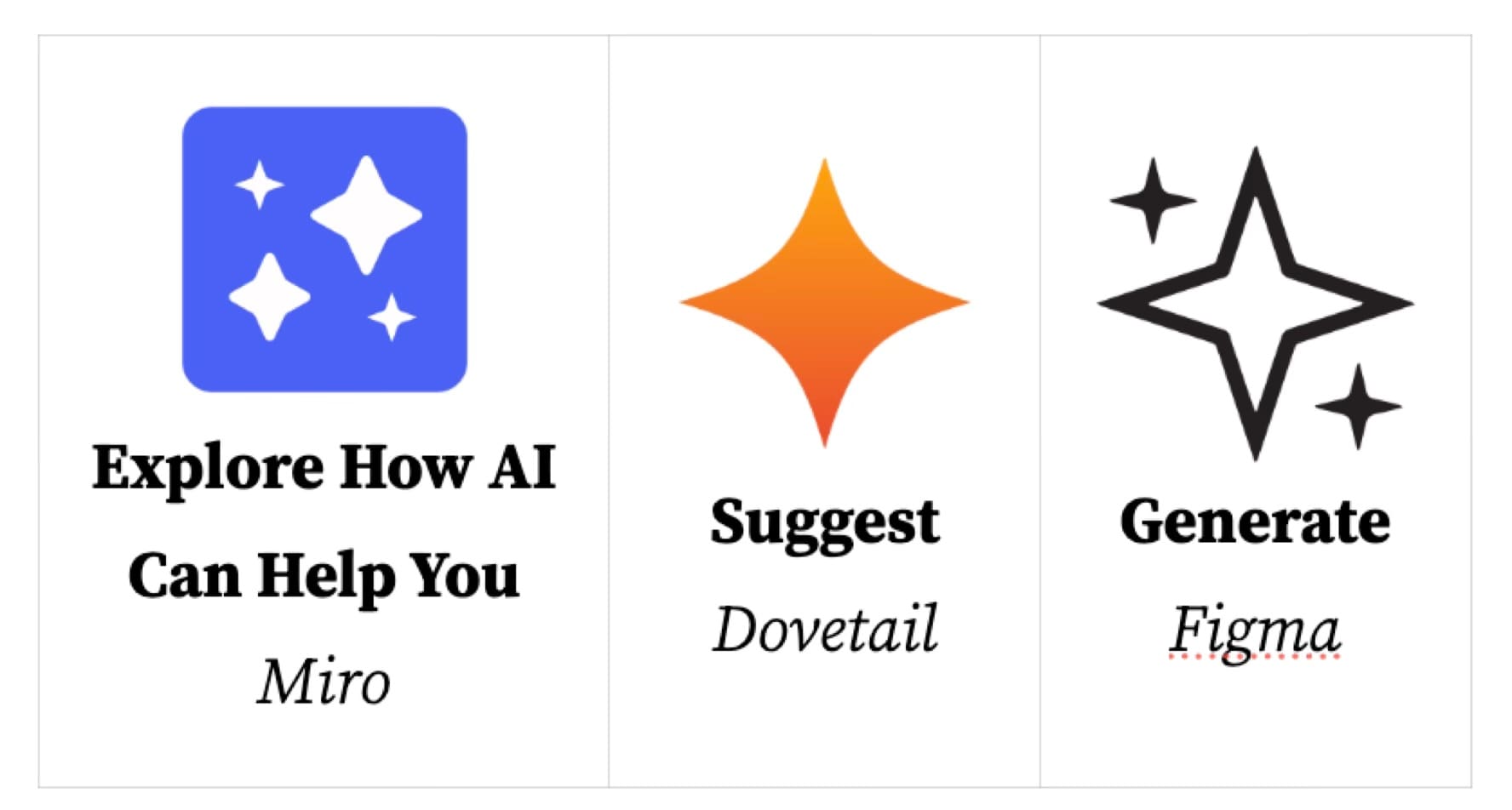
The sparkle might be too ambiguous to signal AI clearly. Mostly because it’s often used to mean “AI-powered feature”, rather than “this specific content was generated by AI”. That’s the kind of signal EU guidelines are trying to rule out.
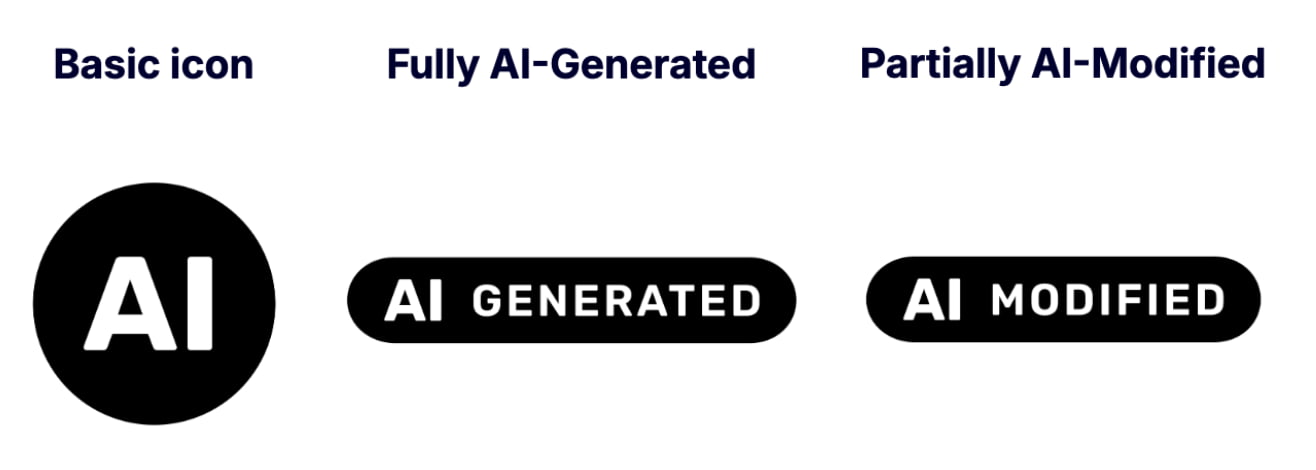
The Commission is explicit: using an icon “does not establish legal compliance by itself.” A barely visible icon, a note buried in the footer, or a label that flashes for a second are all not compliant.
The icon should be clearly visible, with a plain language label and accessible to assistive technologies. A safe bet is to pair any icon with plain text (“AI-generated”) — and it needs to persist when being reshared or downloaded.
In fact, the EU Commission also published Code of Practice on marking and labelling of AI content.
It Isn’t Just EUIt might feel like a yet another regulation coming from the EU, but in reality there are plenty of other similar regulations that emerged recently worldwide:
- China has mandatory AI labelling since 1 September 2025. With visible tags and watermarked metadata.
- California has SB 942, as amended by AB 853, which became mandatory on the exact same day as the EU rules (2 August 2026), deliberately timed to align.
- South Korea has the AI Basic Act that took effect on 22 January 2026, widely cited as the first comprehensive national-level AI law to mandate deepfake labels. Fines are modest by EU standards (roughly $20K per violation), with a one-year grace period before enforcement bites.
- India has an IT Rules amendment, in force since 20 February 2026. Platforms must label “synthetically generated information”, and takedown timing for most harmful deepfakes was cut to 3 hours.
All of these are signs of upcoming AI regulation that looks more like a pattern, rather than a coincidence. So if you’re shipping anything AI this year, it’s probably a good idea to have a conversation about what exactly is going to be AI-labelled, and what not.
Wrapping UpOne final note is that new EU AI transparency rules are much broader than US laws on AI disclosure, where certain state laws require disclosures for synthetic human performers, political advertising or specific AI applications.
None of this really deserves panic or confusion. It’s about a fairly simple idea that has been emerging worldwide at almost the same time:
When AI content could easily be mistaken for human content, creators must say so — in a way that is clear, obvious, and unambiguous. And parts of the UI that are AI-generated must be disclosed as such.
If anything, it will help people distinguish between AI slop and not AI — and everybody can only benefit from that.
Meet “Design Patterns For AI Interfaces”Meet Design Patterns For AI Interfaces, Vitaly's new video course with practical examples from real-life products — with a live UX training happening soon. Jump to a free preview.
 Meet Design Patterns For AI Interfaces, Vitaly’s video course on interface design & UX.
- Video + UX Training
- Video only
Video + UX Training
$ 450.00 $ 799.00 Get Video + UX Training30 video lessons (10h) + Live UX Training.
100 days money-back-guarantee.
Video only
30 video lessons (10h). Updated yearly.
Also available as a UX Bundle with 3 video courses.
- Safer and more transparent AI, European Commission’s official announcement
- EU Icons for labelling AI-generated content, the actual icon set and placement rules
- Guidelines on transparency obligations (Article 50), the detailed compliance guidance
- Code of Practice on marking and labelling of AI-generated content
- FAQ: Transparency obligations under Article 50, plain-language Q&A
- The Problem With AI Sparkle Icons, why ✨ is too ambiguous as a disclosure signal (Nielsen Norman Group)
- Carbon Design System: AI Label, a production-ready pattern for clear, accessible AI disclosure