When a WordPress Site Needs a Rehab Instead of a Full Redesign
Every website experiences a lifecycle. Their look, functionality, and compatibility will eventually become outdated – even with routine maintenance.
Websites built with WordPress are no exception. Backwards compatibility is indeed a hallmark of the WordPress core software. However, themes and plugins can still fall behind. Their functionality may no longer be up to snuff. They could become abandoned by their author and no longer see updates. Or, they may struggle with responsive design and accessibility.
Redesigning an older website has been the go-to method for modernization. This allows us to start from near scratch and fix any shortcomings. But what if that’s not in your client’s budget? What if the site isn’t quite old enough?
A “website rehab” may be the best option in this case. It’s not a full-on redesign, but it provides an opportunity to make measurable improvements.
I’ve added these mini-projects to my service offerings. The results have been positive so far. Keep reading to learn what’s involved and how a website rehab benefits everyone.
How To Identify Potential Candidates
The first step of the process is to determine which clients are a fit for a website rehab. To find out, review your portfolio and consider the following criteria:
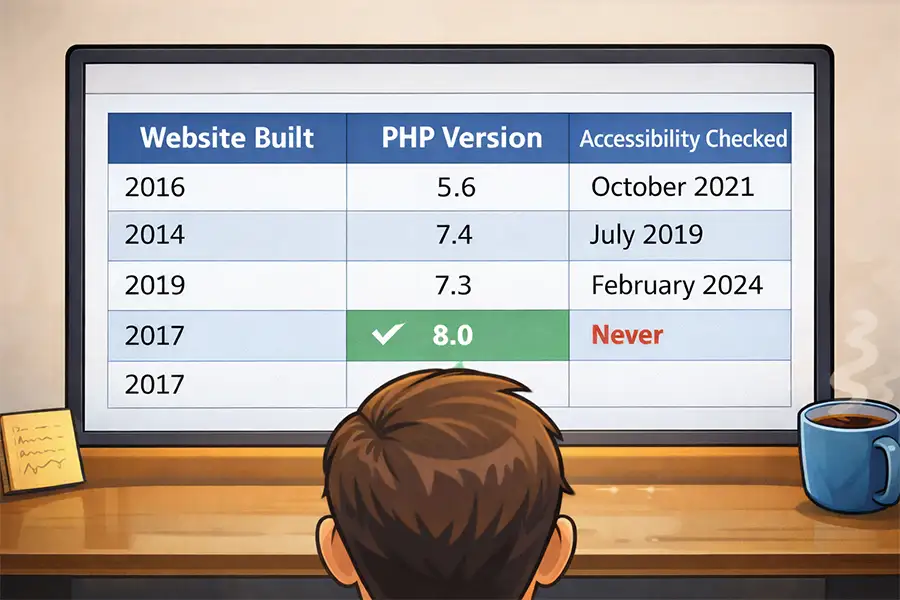
- Age of the website: The older the website, the more likely it is to need some attention. Even websites built within the last two or three years could be a candidate.
- Compliance requirements: Laws related to privacy and accessibility are being introduced and enforced in many locales. They also evolve as requirements change. Websites that must adhere to strict guidelines are always candidates for rehab.
- PHP version: Is your client’s website stuck on an older version of PHP? Upgrading is also an opportunity to reassess the site’s overall health.
- Plugins and themes: Sites running old or abandoned plugins or themes are behind the times. They are due for a refresh.
- Website niche: Technology and best practices move quickly. Websites that specialize in e-commerce, memberships, and public service (aka government) can benefit from some fine-tuning.
Put simply, any website of a certain age is worth considering for a website rehab. There is always room for improvement.
However, a website that has too many shortcomings is probably better suited for a traditional redesign. The key is to determine the amount of work required to bring the site to modern standards. Small changes aren’t always enough.
The Anatomy of a WordPress Website Rehab
So, what does a website rehab entail? Much depends on the details of what needs improvement. For example, it sometimes requires swapping an old plugin for a new one. Or it might involve refactoring some incompatible code snippets.
We can also look at a real-world use case. I’ve focused my efforts on client websites that were using an outdated theme framework incompatible with PHP 8.
These sites were typically built in the 2010s and haven’t seen many new features since then. The WordPress core and plugins were maintained, but the theme was past its useful life. Plugins that required newer versions of PHP couldn’t be used.
My version of a website rehab includes the following:
- Replicating the current look with a new theme: A website rehab is more about improving what’s there rather than a drastic change. As such, I replicate the client’s current design in a new starter theme that’s actively maintained and compatible with the latest versions of PHP. The Block Editor makes it easy to replicate custom layouts, and I can often copy CSS from the existing site.
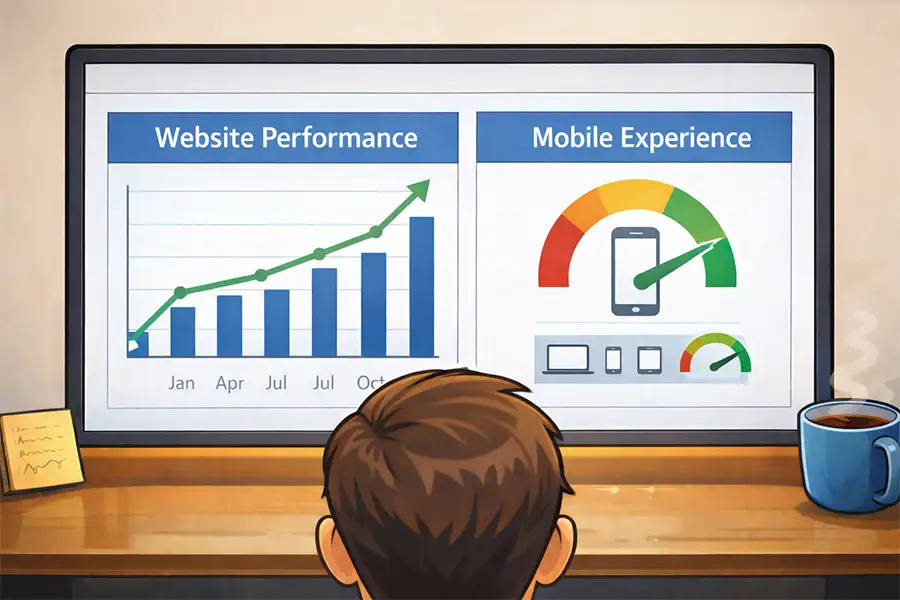
- Improvements to performance and accessibility: Older websites tend to fall short of performance and accessibility best practices. A modern theme can help in both areas. I also audit the site’s color contrast ratios, keyboard navigation, and font legibility.
- Identify and replace abandoned plugins: An abandoned plugin is a security risk. It also degrades the site’s user experience. I implement a suitable replacement when necessary.
- Improve the mobile experience: Responsive design, specifically CSS, has come a long way in the past decade. The new theme provides a great starting point for improving mobile compatibility.
So, how long does it take? I’ve adopted some tools and processes that limit the amount of manual labor involved. In most cases, the job can be done within a week or two.
Create a workflow that helps you complete tasks efficiently and lowers costs. It’s a win for you and your clients.
Small Improvements That Make a Big Difference
It’s fair to wonder if you’re better off waiting for your client to approve a redesign project down the road. Or you might sell them on a redesign instead of the more incremental changes outlined above.
Beyond budgetary concerns, there are reasons why a website rehab is a net positive. First, it keeps you in contact with your client between major project cycles. It demonstrates that you are thinking of their best interests and is an opportunity to share your expertise. That bodes well for the future of your relationship. You’re also boosting your revenue in the process.
The other big benefit is that, when it’s time for a redesign, your client’s website will be in better shape. Addressing issues now means less-intensive technical work later. It allows you to focus on other aspects, such as design and content strategy.
As for your clients, they have a website that works and performs better. It saves them money and extends the life of their site. They can also take advantage of new features without worrying about compatibility.
All things considered, a website rehab may be just the thing to improve your business and client relationships. It’s a service worth adding to your freelance business or agency.